It was Naira rain at the end-of-the-year thanksgiving service of Anambra-based clergyman, Prophet Odumeje, on Sunday, December 12.
Church members and guests who attended the service sprayed money in bundles with reckless abandon. They threw money into the air as the man of God sang praises to God.
Author Archives: donvickky1
Stop politicising insecurity – Sultan, Obasanjo, Bishop Onuoha, others tell leaders
Eminent Nigerians and leaders of apex socio-cultural organisations, on Monday, cautioned leaders at all levels against the undue politicisation of matters bordering on the security of lives and property, saying that it won’t do the nation any good, but aggravate the already fragile situation in the country.
The elder statesmen jointly-led by the Sultan of Sokoto, His Eminence, Alhaji Abubakar Sa’ad, and former President Olusegun Obasanjo, gave the warning while speaking at a one-day ‘Retreat on Inclusive Security’ organized by the Global Peace Foundation in collaboration with Vision Africa in Abuja.
They appealed to the elites to refrain from comments that could widen the “gulf of trust deficit amongst the many divides” that make up the country, saying that Nigeria’s survival as a nation should be considered sacred.
Defence Chief Leo Irabor Orders 50 Generals To Exit Nigerian Military
Fifty Generals in the Nigerian military have been ordered by Chief of Defence Staff (CDS), General Leo Irabor to tender their resignation.
They cut across the Air Force, Army and Navy; around 25 of the senior officers are in the Army.
An impeccable source disclosed that Irabor gave the directive at the Defence Headquarters in Abuja on Monday.
At a 2pm meeting, the CDS thanked them for their service and told all present that it was high time they left office.
But the Course 36 Generals still have more than three years before their retirement.
“They are about 50; 2 of them in the Army will retire in 2022, while the rest have about 3 and half years left in service”, the source revealed.
Another source wondered why the Armed Forces are eager to ease out scores of capable and experienced hands at a time the country is battling insecurity.
Ironically, Irabor recently intervened in the 2016 forceful retirement of 38 Army officers via a letter (Ref. No. CDS/8/A) to Defence Minister, Bashir Magashi, a retired Major General.
They were asked to go in June 2016, an action described as arbitrary by those affected, security personnel, experts and Nigerians.
Till date, the military and the federal government are yet to comply with extant court judgments ordering the officers’ reabsorption.
In January 2020, Justice Rukiya Hasstrup at National Industrial Court in Abuja faulted the Army decision and directed their reinstatement.
In May 2020, Justice Edith Agbakoba approved that contempt of court charge is filed against military chiefs for failing to comply with a valid order.
House of Assembly Members’ Salaries Finally Revealed
The much disputed amount paid to House of Assembly members has been made available by the Senate President himself.
Ahmed Lawan, who is the president of the senate, made it known at a “Lecture Series organised by the National Institute for Legislative and Democratic Studies (NILDS)”.
In the lecture, Ahmed Lawan cleared the air by stating that a senator’s monthly salary is not 13 million naira as generally believed. He made it clear that the said 13 million naira is for office allowance, which is paid quarterly. That of the House of Representatives members is 8 million naira, also paid quarterly.
The real salary for a senator is 1.5 million naira and that of a house of representatives member is 1.3 million naira, which is paid monthly.
The Senate President further urged Nigerians to believe in the Senate, as they are not rubber-stamped by the Senate.
The air has now been cleared about how much a senator or House of Representatives member receives.
Upgrade Learning System, Mass Communication Students Tells Kadpoly Management.
Students of Mass Communication Department, Federal Polytechnic Kaduna, Kaduna State have expressed shock over the poor learning facilities currently faced by the Polytechnic community.
This motion was moved yesterday by the president of the department, Mr. Tsiga Umar at the department complex while calling on the management of the institution.
Speaking further, he pointed out the need to have a modernize and well equipped practical studio so as to enhance media learning inorder to acquire the skills needed to excel in the field of journalism.
Therefore, it is important to know that there is the need to make adequate provision of class rooms within the school, as student receives lectures in an overpopulated and uncondusive environment, while others receives lectures while standing.
Improve Our Transport System, Kaduna Polytechnic Students Cries.
Students of the Federal Polytechnic Kaduna, Kaduna State yesterday expressed disatisfaction over the inadequate transportation system set aside to aid movement of staff and students in and out of the campus.
It was reported that before the outbreak of covid-19 pandemic, there were only three (3) buses used to convey staff and students of the institution. This mainly affected students living in the main campus (Tudun Wada) and those living in sabo campus respectively because majority of the students lives in these areas.
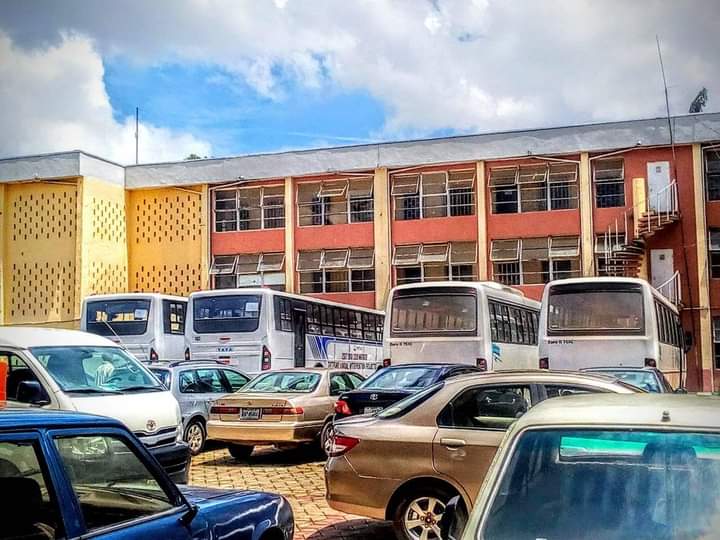
However, before resumption of students from the covid-19 pandemic break, there was the provision of three (3) more ultra modern, computerized and air-conditioned buses commissioned by the then rector of the institution, Prof. Dalhatu Bugaji.
Despite this addition, students have called out on the authorities on the need for more as the available ones cannot serve it’s purpose effectively.
Reacting to the demands of the students, the rector promised immediate solution and assured that adequate buses would be made available for students coming from Ugwan Rimi, Sabo and Tudun Wada campus respectively.
Indecent Dressing, a Major Challenge to Kaduna Polytechnic
The management of the Federal Polytechnic Kaduna on Tuesday the 23rd of November 2021 expressed worries over the indecent dressing mode adopted by students of the institution.
This was made know during a press release by the deputy chief security officer of the institution, mallam Abdulahi Musa. According to him, students now derives pleasure in indecent dressing forgetting the laws that guides against it.
In his statement, he said that when stopped at the school gate, students now uses this medium to harass both security personnels and other staff of the institution, calling them all sort of names.
He blames this act mostly on the newly admitted students, owing to the fact that they were not properly orientated.
Mal. Abdulahi further gave a strict warning that whosoever is found wanting will face the consequences of the law.
He therefore, advised students to obey the rules and regulations of the institution, shun exam malpractice, avoid cultism activities and any act that will bring bad name to the institution.
Also, he urged students to maintain their primary aim of coming to Kaduna Polytechnic inorder to make their generation proud of their achievement.
Kidnapping in Nigeria.
Records has it that 2,371 people were abducted in Nigeria in first half of 2021.
An average of 13 persons were abducted daily in Nigeria in the first half of 2021, according to a report by SBM Intelligence, bringing to 2,371 the number of persons kidnapped in the country within the first six months of the year.
The highest number of kidnap victims, about 605, was recorded in February.
This was closely followed by March with 534 kidnap victims; May, 355 kidnap victims; while April, January and June had 316, 284 and 277 respectively.
Niger State, the hotbed of kidnapping
Niger State recorded the highest number of persons abducted, with 643 victims in 28 kidnap incidents, while 58 people were killed during the abductions.
This was followed by Zamfara State with 519 kidnap victims in seven incidents, leading to the death of 22 people, while Kaduna State recorded 360 kidnap victims in 26 incidents, leading to the deaths of 41 persons.
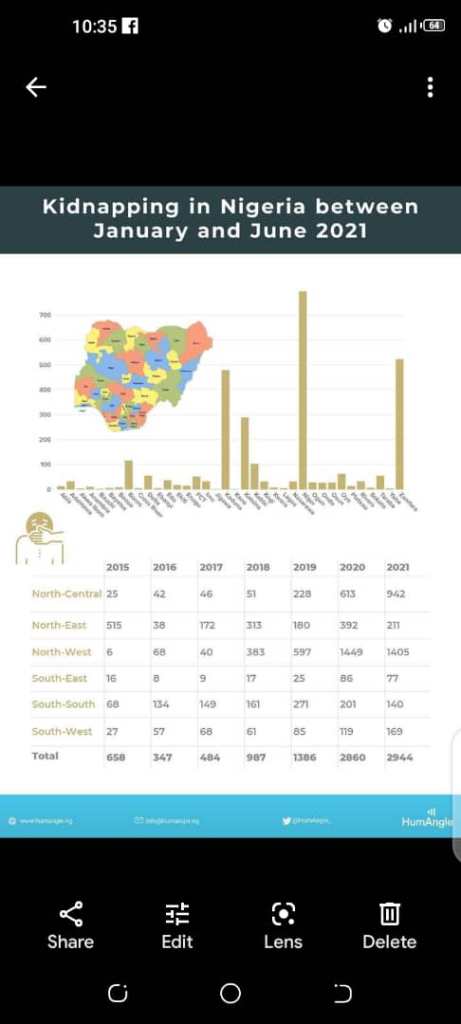
The kidnap victims in other states are; Abia (6), Abuja (50), Adamawa (3), Akwa Ibom (2), Anambra (14), Bauchi (3), Bayelsa (7), Benue (6), Borno (1), Cross River (4), Delta (51), Ebonyi (5), Edo (18), Ekiti (14), Enugu (15), Gombe (1), Imo (25), Jigawa (2), Kano (3), Katsina (236), Kebbi (81), Kogi (31) and Kwara (10).
Others include: Lagos (6), Nasarawa (44), Ogun (26), Ondo (17), Osun (23), Oyo (61), Plateau (10), Rivers (14), Sokoto (10), Taraba (46), and Yobe (4).
Schools were often targeted in the abductions that took place in the first half of 2021, with hundreds of students taken hostage in the north-west.
Reacting to the high incidents of kidnapping in the country, particularly by bandits, Shehu Sani, a former senator representing Kaduna central said, the north-west will be a better place if the Federal Government could deal with bandits with the same vigour used against secessionists.
The north-west had been the hotbed of banditry in recent times, with over 500 students kidnapped in the region by bandits this year alone.
QThe latest is the abduction of 121 students in Bethel Baptist Secondary school in Damishi, Chikun LGA of Kaduna State, on July 5. Less than a week later, the Emir of Kajuru and 13 members of his household were abducted at his palace.
FG’s debt profile surged 658% to N26.9trn in 21 years.
DEBT PROFILE UNDER YAR’ADUA ADMINISTRATION.
A total of 6.17 trillion naira was incurred as debt under the Yar’adua administration, making it the second highest after president Obasanjo.
DEBT PROFILE UNDER JONATHAN’S ADMINISTRATION
At the beginning of former President Goodluck Jonathan’s tenure in 2011, the federal government had an accumulated debt of N6.17 trillion.
Analysis of the debt figure showed that local debt amounted to N5.62 trillion while foreign debt stood at $3.5 billion (about N548.65 billion, using the exchange rate of N156.7/$1).
By the end of 2015, the foreign debt component hit $7.3 billion, while domestic debt increased by N8.4 trillion.
HOW MUCH BUHARI BORROWED IN 6 YEARS
The Budget Office’s medium-term expenditure framework and fiscal strategy paper from 2015 showed that the Buhari-led administration incurred N7.63 trillion in domestic debt from June 2015 to December 2020.
On external borrowings, President Buhari increased debt from $7.3 billion in 2015 to $28.57 billion as of December 2020. This means that the president incurred $21.27 billion on foreign loans to the country’s debt portfolio.
The country’s exchange rate moved from N197 to a dollar in 2015 to N381 at the end of December 2020.
Analysis of consolidated debt showed that the external debt increased by 291.37 percent while domestic debt grew by 86.31 percent in the last six years of the Buhari government.
Overall, the Buhari-led government has had an accumulated debt of N17.06 trillion as of March 2021, using the N381 exchange rate. This represents a 173.2 percent increase from when he was elected president in 2015.
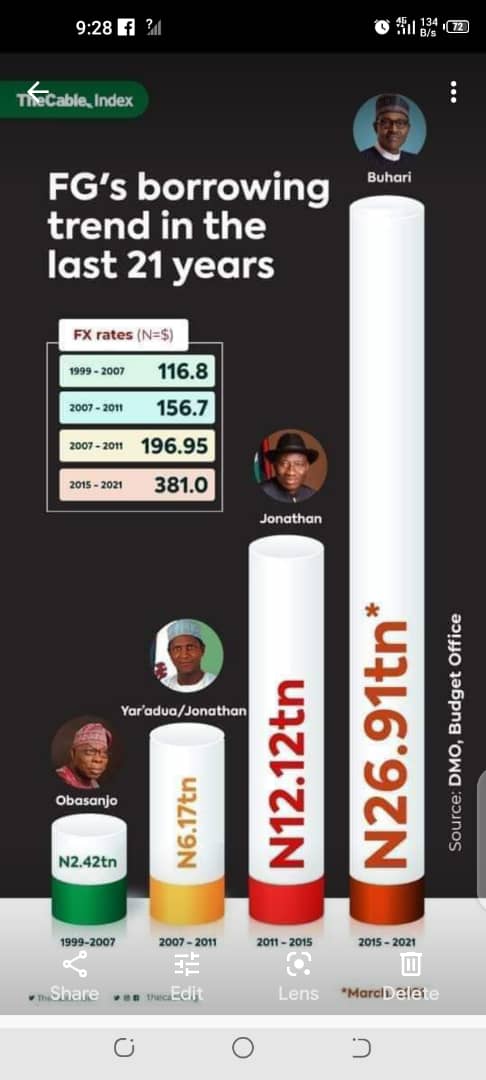
Nigeria’s public debt has been on the rise. Despite securing debt relief during the Olusegun Obasanjo-led administration, successive governments have continued on a borrowing spree.This has raised concerns among Nigerians on the debt sustainability of the country amid dwindling revenue to meet the debt obligations to creditors.
On July 7, 2021, the upper chamber approved a loan request of N2.343 trillion, approximately $6 billion and another $8.3 billion and €490 million.
“The proposed new capital raising is the new external borrowing provided in the 2021 Appropriation Act to part finance the deficit in the budget. In other words, the new capital raising has already been approved in the budgetary process by the executive and legislative arms of government,” the DMO had said in a statement.
As of March 2021, Nigeria’s total public debt has hit N33.1 trillion ($87.24 billion) — an accumulation of borrowings from successive governments, of which most were borrowed since the return to democratic rule in 1999.
The overall public debt is the total debt accrued by federal, states, and the FCT from local and international lenders.
Of the N33.1 trillion, the federal government alone borrowed N26.91 trillion — this includes the FGN bonds, Sukuk, green bonds and Euro bonds.
Finally, after weeks of data aggregation, number crunching, dissecting and analyses of freedom of information (FOI) response from the Debt Management Office (DMO), TheCable presents findings that highlight how Nigeria’s aggressive borrowing defies its fiscal responsibility laws.
FG DEBT CLIMBED 658% TO N26.9 TRILLION IN 21 YEARS
Data from the DMO seen by TheCable showed that federal government borrowings (local and foreign debt) climbed from N3.55 trillion in 1999 to N26.91 trillion at the end of March 2021 (the country’s latest official figure).
This represents a 65.8 percent increase in 21 years, comprising the administrations of Olusegun Obasanjo, Umar Musa Yar’Adua, Goodluck Jonathan, and the current Muhammadu Buhari.
DEBT PROFILE UNDER OBASANJO ADMINISTRATION.
Under the Obasanjo regime, it was recorded that a total of 2.42 trillion naira was incurred from the period of 1999 to 2007.
The Struggles Of The Boy Child.
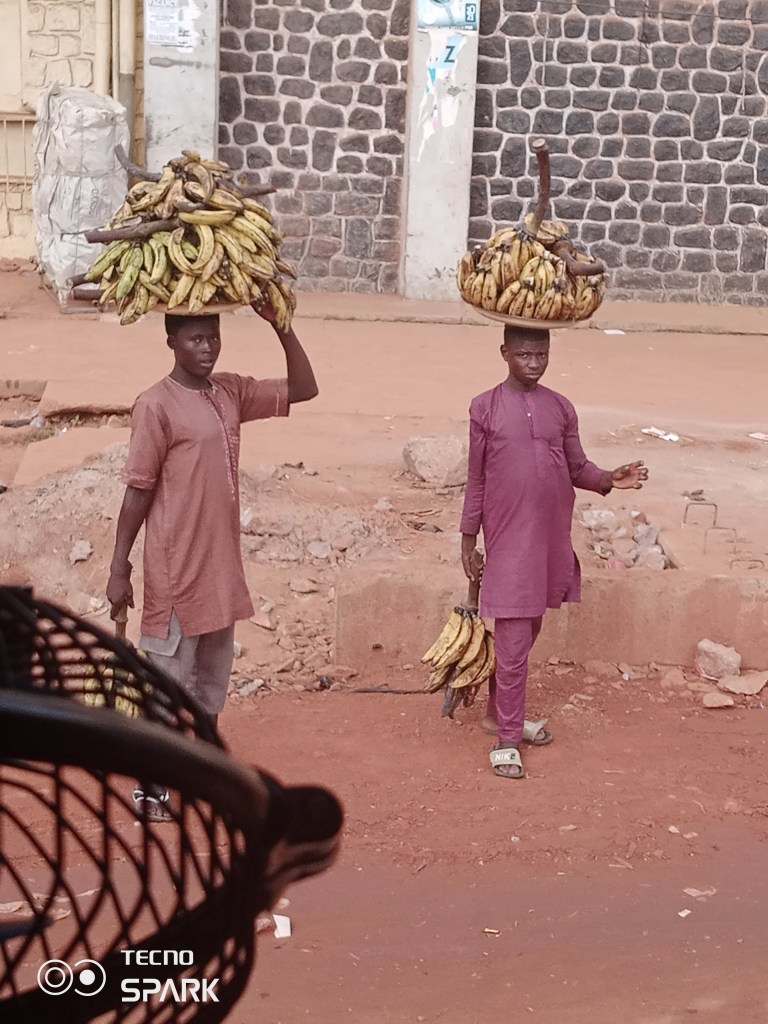
Many adolescent boys are doing well. They graduate from high school, make healthy choices, and reach adulthood prepared for the world of work and the responsibilities of family. For young men like these, opportunities have never been greater.
For some boys, the transition to adulthood is more difficult. Some American boys become victims of crime or commit crimes themselves. Some abuse substances at a young age or suffer from mental health problems such as depression. Some do poorly in school or drop out. And often, there are disparities among boys based on race and ethnicity, family structure, socioeconomic status, and the places where they live.
The challenges boys face have not gone unnoticed by scholars, popular media, and the public. Recent headlines have asserted that there is a problem with boys, a boys crisis, and a new gender gap between boys and girls. But not everyone agrees. Some say that the toughest problems are faced only by subgroups of boys.
This brief sets aside the debate to present research-based information about the strengths that make boys likely to succeed and the risks, or challenges, that increase the likelihood that they will struggle. It does not make an effort to compare boys to girls; it does not intend to imply that an issue for boys isnt also relevant for girls.
This brief uses research-based information to highlight the positive impact that caring adults in families, schools, and communities can have on the well-being of boys and young men and the concrete steps they can take to help the boys and young men in their lives.
For more information on happenings around the world, contact me on fidelisvictor.code.blog.
 Site Title